
This op-ed, written by Eli Pivnick, first appeared in Castanet on June 9, 2026.
On the B.C. government website, you can read the following: “B.C. is a world leader in sustainable forest management with leading-edge environmental practices. 94% of British Columbia is designated as Crown land. This allows the province to sustainably manage forest resources.”
You can also read this: “The majority of B.C.’s forests are independently certified to strict third-party sustainability standards.”
However, if you talk to B.C. forest ecologist Rachel Holt, B.C. forestry consultant and author Herb Hammond or former B.C. Liberal MLA Mike Morris, you get a very different perspective.
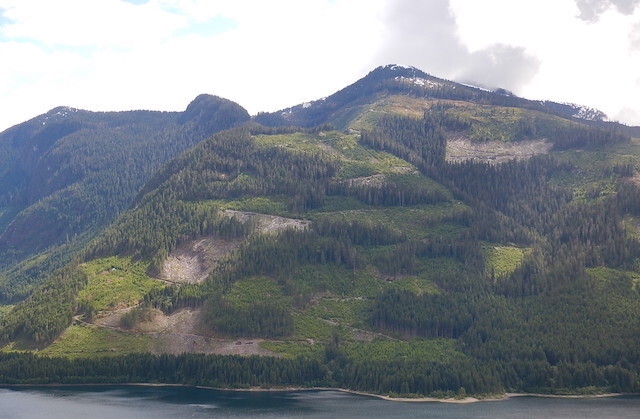
B.C. forests are in crisis. On the ground, the crisis looks like this:
• Only one spotted owl, a species which lives in primary forests, currently lives in the forests of B.C.
• Almost half the herds of southern mountain caribou in B.C. are now extinct. The caribou depend on older primary forests. The B.C. government has taken drastic measures to save more herds from extinction. That includes shooting wolves and tranquilizing female caribou and placing them in fenced off pens to give birth to protect the calves from predation. Meanwhile, over 300,000 hectares of their critical habitat has been logged. Only one third of remaining habitat is protected.
• More than 80 sawmills and dozens of pulp, pellet and panel mills have closed in British Columbia since 2000.
According the Council of Forest Industries, in B.C. three to four tree seedlings are planted for every tree that is cut. That does not solve the problem. In the last 40 years, the rate of cutting has sped up. That means there are many very young forests, not suitable for wildlife habitat and not suitable for logging.
A much bigger issue is planting trees does not make a forest. A primary forest, one that has never been cut, is vastly different than a re-planted clear cut. On mountainous sites, little soil remains and planted seedlings do not flourish. It may take hundreds of years of slow, soil building by natural processes to create the conditions required for a forest to flourish.
When there’s a clear cut, the vast majority of nutrients on the land are removed. Logs are trucked away and branches and damaged logs, up to 50% of above-ground biomass, are typically burned.
Nutrients are in short supply. The ground is often plowed and sometimes sprayed with pesticides. Pesticides are also applied to seedlings. The shade is gone and there are no trees to slow snow melt and rain run-off, so the site dries out.
Logging roads further speed up run-off. The movement of heavy machinery over the land compacts the soil damaging the critical bacteria, fungi and invertebrates.
A forest is a complex system which has evolved over thousands, even millions of years. There is structural complexity, including tall trees, saplings, seedlings, dead rotting trees and sunlit openings, as well as a myriad mosses, lichens, fungi, insects and other invertebrates which interact directly with the trees.
There are birds, snakes, frogs, rodents, bat and large mammals, which both benefit from and give back to the forest. There are many species of trees which thrive in different habitats and at different levels of succession in the life of a forest.
There are also many understory plants, both shrubs and non-woody plants. Mycorrhizae are mutually beneficial associations between fungi and tree roots. The fungi colonize the root system, extending thread-like hyphae into the soil. They dramatically increase water and nutrient absorption for the tree, while receiving essential sugars from the tree’s photosynthesis. If you plant tree seedlings in a desert of your own making, you do not recreate a forest.
A tree plantation is difficult to walk through because, if the seedlings survive in good numbers, the forest is unnaturally dense. If the seedlings do not survive, you end up with a field of invasive grasses and other invasive plants.
Only a few tree species are planted and thy from a limited genetic stock. In a planted forest, there are few insects, few birds and few animals. The further the plantation is from a healthy forests, the longer it will take for colonization by some of the elements of the healthy forest.
A good portion of our forests need to be left alone. Where logging is carried out, if done selectively with smaller equipment, natural regeneration can occur. There are numerous examples of community forests and private woodlots in B.C. that have been logged for years and yet remain intact.
Several groups in B.C. are pushing for less logging, protection of our remaining primary forests and more ecologically sound forestry practices. The down side? Large forestry companies make less profit. The upside? More jobs, healthy forests, healthy wildlife populations, better hunting, fishing and foraging opportunities, a healthier tourism industry, fewer wild fires and fewer greenhouse gases.
Leave a Reply