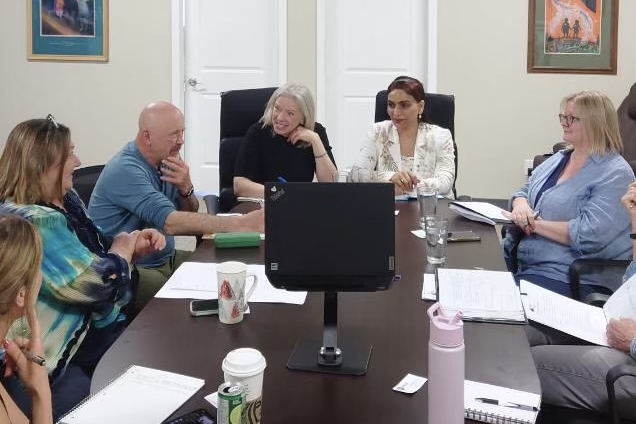
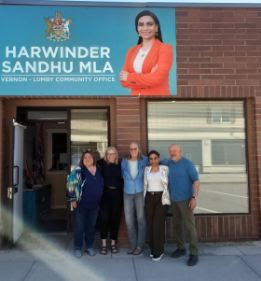
On May 2, 2026, IWTF members met with Minister Randene Neill (Ministry of Water, Land and Resource Stewardship (WLRS)) and Harwinder Sandhu, MLA for Vernon-Lumby. The purpose of the meeting was to discuss water and forestry legislation that recognizes water’s primary value to the watersheds supplying IWTF communities.
IWTF came to the table requesting three commitments from the WLRS:
1. Action plans
Provide provincial leadership on, and coordination of, previous commitments to drinking water protection, such as the 2004 federal CCME “Source-to-Tap Strategy” (with updates to 2022), the 2006 “Memorandum of Understanding Regarding Inter-agency Accountability and Coordination on Drinking Water Protection”, the 2022 “Action Plan for Safe Drinking Water in BC”, and the 2024 “Watershed Security Strategy”. The government’s focus on the economy and resource revenues is undermining the intent, funding for, and implementation of these important initiatives. The Ministry’s own advisor, Oliver Brandes (POLIS Project), has warned that adequate funding for watershed security is not just essential for implementing proactive, community-driven solutions; it also helps to avoid costly crises that strain public resources.
⏱ Timeline: Launch a public regulatory review process within 12 months; propose draft regulatory amendments within 24 months.
2. Regulatory reform
Initiate a formal regulatory review of the Water Sustainability Act to align with previous and ongoing water supply, quality, and management commitments. Add water supply protection, cumulative effects assessment requirements, strengthened environmental flow standards, and climate adaptation triggers that adjust allocation during drought. The WSA’s regulatory framework was designed for a more stable climate; it must be updated to address the reality of declining snowpack, shifting streamflow timing, and increasing drought frequency.
⏱ Timeline: Launch a coordinated cross-ministry, cross-agency effort to unify a meaningful, actionable water protection strategy within 6 months; propose a final strategy within 24 months.
3. Climate-resilient forest management standards
Work with other BC resource ministries to develop new forest management standards that prioritize watershed and primary forest protection under climate change scenarios. Current management practices were designed for historical climate conditions; updated practices must account for increased wildfire risk, reduced snowpack, and altered hydrology. New standards must address climate-resilient retention levels, riparian buffer widths, road deactivation timelines, cumulative effects, and post-harvest hydrological monitoring and follow-up. Converting Old Growth deferrals to permanent protection areas — particularly in headwater areas supplying communities – is a key element. Deferrals have served their purpose as a bridge measure; communities and ecosystems need the certainty that permanent protection provides.
⏱ Timeline: Establish a technical working group within 6 months; publish draft standards within 18 months; implement within 24 months.
Key takeaway
IWTF recognizes the funding, competing interests, and policy challenges facing the Ministry and is committed to working with the Ministry to address these challenges. We are asking you how we can help you make real, permanent change to watershed security. Ongoing engagement with communities like ours ensures that community voices remain part of the Ministry’s decision-making process and that commitments are tracked collaboratively.
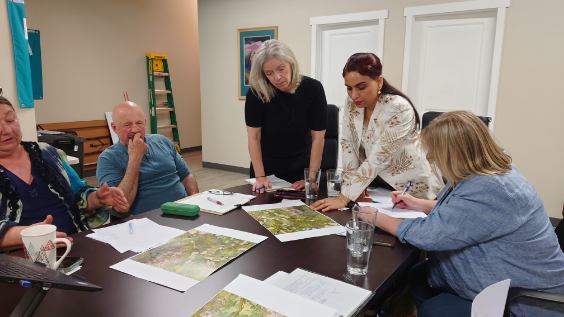
During the vibrant, hybrid meeting, IWTF discussed this list and voiced its urgent community concerns: water security, forest and watershed protection, and legislative modernization. Extra time was given for questions and discussion.
Minister Neill’s office responded with a formal letter, below.
IWTF is committed to working with the WLRS to address these challenges, ensuring community voices remain part of the Ministry’s decision-making process and commitments are tracked collaboratively.
Leave a Reply