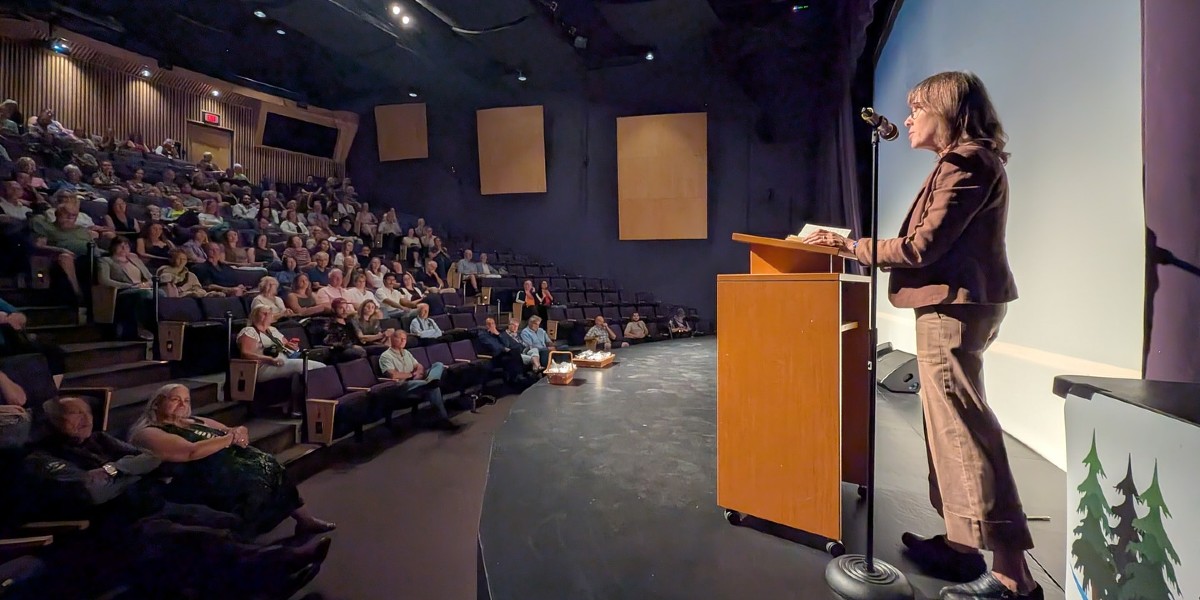
Thank you for attending this documentary film that makes the connection between perilous forestry and flooding in BC.
How can you help?
- SHARE the film to increase awareness in others (YouTube link here).
- SEND the link to your MLA, local government, family, friends and neighbours.
- JOIN the Interior Watershed Task Force. Join us on Facebook, email us to be added to our mailing list, or join your local coalition group. A list of IWTF coalition members is here.
- DONATE to Interior Watershed Task Force at iwtfdonations@gmail.com to help support efforts like this screening of “Trouble In the Headwaters.”
- WRITE your MLA about the film and IWTF’s proposed solution to our failing forests: The Three-Zone Forest Management Framework. The Framework protects nature, restores degraded lands and sustains healthy communities and economies. See below for more information.
- CONNECT with elders in your area for history, knowledge, and inspiration about what happens on the land.
- CONSIDER how you can help make the Ministry of Forests and Forest Sector be held accountable–legally–for making communities less safe (water quality, floods, drought, fires, biodiversity).
- SUBSCRIBE to the Evergreen Alliance for current and high-quality news and analysis.
- FOLLOW the BC Forestry Reform Facebook group.
The Three-Zone Forest Management Framework
IWTF’s proposed solution to BC’s broken forest management industry
The Interior Watershed Task Force supports the Three-Zone Forest Management Framework. It divides BC’s forest lands into three zones that are each managed according to their public and ecological benefit. The Framework is specific about which forests should be managed in which zone, and how and for what goals, thus reducing the confusion, conflicts and risks that occur under BC’s existing forest management system:
Zone 1: Primary forests
- Primary forests are natural, never logged forests of any age, location, and condition
- Protects ecosystems with the highest climate change resilience, biodiversity value, water quality, and hydrologic function
- Excludes industrial human activity, including logging, road building and other industrial uses
- Is permanently removed from the Timber Harvesting Land Base
- Allows natural disturbances to take place, as part of ecological function and resiliency
- Encourages traditional eco-cultural practices
Zone 2: Restoration forests
- Restoration Forests are previously logged forests that are restored and protected to provide greater public value than simply as timber supply. They include but are not limited to:
- Forests improved for wildlife to provide cover, safe movement, migration and gene flow corridors between ‘islands’ of Zone 1
- Forests where there are risks to community water supplies and flows, fish habitat, wetlands, and hydrogeological function
- Forests with high biodiversity or other ecological values
- Excludes future industrial human activity
- Is permanently removed from the Timber Harvesting Land Base
- Allows natural disturbances to take place
- Is guided by Traditional Ecological Knowledge, restoration ecology, natural history, and reclamation forestry
- Occurs over an extended time, requiring long-term commitment and funding
Zone 3: Industrial forests
- Industrial Forests are previously logged forests deemed suitable for continued timber extraction
- Allows other resource extraction/use
- Stays in the Timber Harvesting Land Base and represents the majority of BC’s forest lands
- Is managed under science-based principles and standards, with respect to harvesting, reforestation, and cumulative risk management on both timber and non-timber values.
The Interior Watershed Task Force is a volunteer coalition of community groups and individuals based in Interior BC, concerned about the state of our watersheds, forests and biodiversity. We apply science and personal experience to inform and advocate for the protection of watersheds and primary forests, and for the recovery of degraded forests. Our advocacy respects and recognizes the ancestral rights of BC’s First Nations to the territories on which we live and work.
Join us to send a strong and unified message to the BC government! Watch out for future events sponsored by the Interior Watershed Task Force!
Leave a Reply